The story of Alaa Mowaddad"
"She went to her home to bring some flour, but returned in a shroud."
"I'm a girl, they won't target me!"
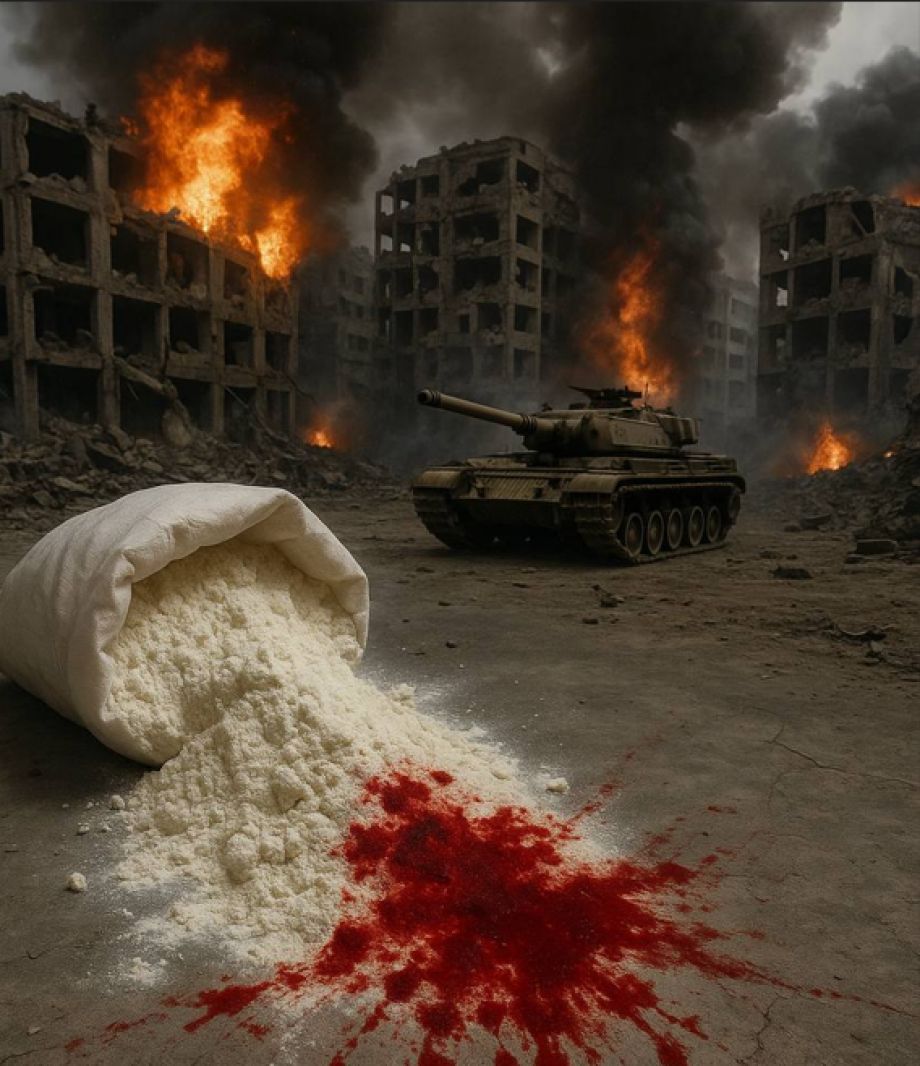
In a fleeting moment that made her forget how many women had already been killed by the occupation, Alaa Mousa Mowaddad (36) set out with her mother, her uncle’s wife, the latter’s son, and his little sister from their displacement tent in western Gaza City to their home in the Shuja’iyya neighborhood in the east. Their goal was simple — to bring back some flour from the house last week, as Gaza faces a severe flour shortage amid a devastating famine gripping its people.
Although she was known among her family for being terrified of the sound of bombings and avoiding areas near Israeli troops, Alaa overcame her fears that day, determined to stop her brothers from risking their lives to go instead. She left with her hand over her heart and, as her mother later recalled, “a farewell look in her eyes — one that would never return.”
The area they went to had been evacuated, drones hovered above, and artillery fire echoed constantly. “We went, not expecting it to be that terrifying,” her mother, Um Mohammad Mowaddad (55), recounted. “We managed to bring the flour. Alaa carried a bag of flour and clothes for her sister in another bag. Each of us carried a sack of flour, and we left the house in two groups. I walked ahead with her uncle’s wife, and she followed behind with the little girl — the time gap between us was enough that I didn’t see her again along the way.”
A Bite Soaked in Blood
When Alaa failed to arrive at the meeting point she had agreed upon with her mother, fear began to take hold of the mother’s heart. Yet her mind could only cling to one possibility — that her daughter had simply lost her way or become disoriented among the ruins of Shuja'iyya, the destroyed neighborhood.
Deep down, however, she knew that was unlikely. Her daughter had grown up in those streets; she knew every inch of them, every main road by heart.
With no other choice, the mother turned back to search for her. She left everything she had brought at her sister-in-law’s house and returned, helped by a young man in the area — until she finally found her daughter lying in the street, drenched in blood.
Her tears now mirror the agony of that day as the memory replays before her eyes:
“She was struck by a bomb fired from a drone (a quadcopter). Her cousin arrived first, then her brother. Her legs were torn apart — she was martyred instantly. We covered her body with a sheet and placed her in a neighbor’s house because the planes were still hovering. Later, we carried her away and buried her in the cemetery. We couldn’t leave her body in the street.”
Recovering her body was no easy task for her brother Abdullah, who rushed to the scene when he heard the news. To him, Alaa was “a second mother.” Her cousin Shareef recounts what they lived through that day to Palestine Newspaper:
“It was an enormous risk, but we were determined to honor her and give her a proper burial, no matter the cost — especially since she was a woman. When I arrived, a quadcopter drone was hovering just twelve meters above us. I ran toward where her brother and another young man were hiding behind a wall, trying to stay out of the drone’s sight. We found Alaa lying there, her body beside a sack of flour and clothes. My little sister, terrified, had run away screaming.”
A Direct Target
Lying lifeless in the street, beside the sack of flour she had been carrying — everything was visible to the drone and the operator controlling it from afar: a woman accompanied by a little girl, both carrying supplies to ease the hunger of their starving family amid the growing famine. Yet none of that humanity spared them from being directly targeted.
In a split second, the little girl froze in terror as she saw her cousin Alaa stretched out before her, lifeless — while she herself survived with wounds and shrapnel injuries. The terrified 14-year-old began to run, alone, down an empty street lined with abandoned homes, their residents displaced by the occupation. She ran toward her mother and aunt, staggering under the pain of her injuries, sometimes leaning on walls and poles to keep herself moving as the pain grew sharper and louder with every step.
“Alaa was my right hand in life — she held our home together,” her mother says, tears trembling at the edge of her eyes, choking her words. “Even though she was always afraid to leave the tent because of the war and the bombing, this time she seemed to give up on herself. Before leaving, she told her sisters: ‘If I come back, then I come back.’ It was as if she knew something. Every other time I went home, one of her sisters would come with me — but not her.”
Her mother can no longer count how many times their family was displaced from their home in Shuja’iyya. The family, who had refused to flee to the south, found themselves moving between relatives’ houses and shelters across the city.
Alaa loved children — “she made everyone happy,” her mother says softly. Skilled in traditional Palestinian embroidery, Alaa found in her heritage a refuge, a way to reaffirm her rootedness in her identity. She embroidered the map of Palestine, the flag, and Jerusalem on her handmade pieces — necklaces, keychains, and small ornaments.
“In her last days,” her mother recalls, “she made little necklaces for her nieces and nephews.”
That was the last memory they have of her
شهيدة
"The story of Alaa Mowaddad"
Alaa Mowaddad"
حي الشجاعية
Age: 36
December 01, 2025